Sustainability of Our Biomass
Where does our biomass come from?
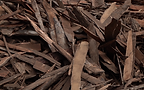
We rescue sustainable forestry residues from sawmills that, due to limited waste management options, were often destined for open-pit incineration. But where does that biomass actually come from?
Responsible biomass sourcing is the foundation of Exomad Green’s carbon removal model. As part of our feedstock policy, we source only sawmill residues—such as sawdust, offcuts, bark, and other processing by-products—and apply a rigorous system of supplier due diligence, legal verification, traceability, and forest monitoring before that biomass enters our operations. We work with over 50 vetted sawmills. Every load can be linked back through the supplying sawmill to its registered forestry origins, supported by ABT documentation, approved forest management plans, and geographic coordinates. This system operates within Bolivia’s Law 1700 forestry framework. Exomad Green adds an additional layer of oversight through satellite-based monitoring of sourcing areas, using NDVI and historical imagery to detect vegetation changes over time. Our satellite monitoring reviews vegetation trends in the broader sourcing landscapes associated with supplying sawmills. This monitoring is used as a risk-screening tool and is combined with ABT documentation, supplier checks and independent audit evidence. Satellite evidence shows long-term forest persistence around both Concepción and Riberalta, including the forest landscapes of northern Bolivia where our biomass supply originates.
Our approach is therefore built on three layers of protection: national forestry regulation, end-to-end biomass traceability, and independent monitoring of the forests connected to our supply chain.
On This Page
01
Context: Bolivian Forestry Laws
02
Sustainable Forest Management
03
Exomad Biomass Sourcing Protections
04
The Process
05
Supplier Selection Protocol
06
End-To-End Traceability: Forest Monitoring Center
Context: Bolivian Forestry Laws
Bolivian forestry laws were established in collaboration with USAID over two decades ago. They comprehensively regulate the entire supply chain, spanning from extraction and transportation to processing and exportation all of this in the law 1700. Remarkably, these regulations have effectively nurtured a circular economy that has have shown forest persistence over time in areas where sustainable forest management has been applied.
The impact of these laws is demonstrable even from space. Satellite images vividly illustrate the stark contrast between Bolivian forests dedicated to sustainable forestry and neighboring areas in Brazil predominantly engaged in agricultural activities. The resilience and preservation of Bolivian forests, thanks to these legal frameworks, stand as a testament to their success

Sustainable Forest
Management (S.F.M.)
Sustainable Forest Management is the cornerstone of the law 1700. It is the controlled and selective use of forest resources. There is no clear-cutting. Forests are divided into management areas, trees are individually inventoried, and only those meeting strict technical criteria may be harvested by legally authorized and vetted sawmills. Seed trees of the harvestable species are retained for natural regeneration, extraction is carried out with low-impact methods, and each tree is traced through transport and processing. This allows the forest to remain standing, regenerate naturally, and continue functioning as a forest over the long term.

Timeline of Broader Biomass Sourcing Areas Over 15 Years
Evidence of the broader sourcing areas around Concepción and Riberalta shows long-term forest persistence, with the managed forest areas remaining predominantly forested over time. This is consistent with evidence reported by Tropenbos International: an IBIF analysis of the Bolivian Indigenous territories of Monte Verde, Lomerío and Guarayos found that between 1996 and 2018, areas under approved forest management plans with timber harvesting experienced only 0.56% deforestation, compared with 12.03% in areas under management plans without timber harvesting. While this comparison does not by itself prove causation, it provides strong evidence that regulated Sustainable Forest Management and selective harvesting are not synonymous with deforestation and, when properly implemented, can coexist with long-term forest conservation
Riberalta:
Concepcion:


Satellite imagery provides a long-term view of land-use dynamics around our sourcing areas. In both timelines, the white outlines indicate the broader regions containing the Sustainable Forest Management (SFM) areas from which the sawmills supplying Exomad Green source their timber. Exomad Green uses the residual biomass generated by these sawmills, including sawdust, bark, and offcuts.
In Concepción, the satellite timeline shows that the forest cover within the identified sourcing area has remained largely intact over time, particularly when compared with surrounding areas where greater agricultural development can be observed. In Riberalta, the contrast is even more visible: agricultural expansion can be seen progressing on the Brazilian side of the border, while the forested areas within the Bolivian sourcing region remain comparatively stable.
Together, these timelines provide an additional layer of visual evidence showing limited observable land-use change within the forestry areas associated with our biomass supply chain over the period shown.

How does a harvested Sustainable Forest Management Area look like ?
The
Process
Sustainably managed forest areas are strictly monitored. An approved plan defines which areas may be used, which species may be taken, and which trees meet the legal criteria for harvest. Those trees are marked, recorded, and moved only to vetted sawmills, where origin documents are checked before the log is accepted.
At the sawmills the log is processed. What remains is residue: offcuts, bark, and sawdust. With limited waste management alternatives available, these residues were often burned in open pits at sawmills. Today, with Exomad Green, they have a cleaner path forward. It can be incinerated in an open pit at the sawmill, with the air pollution and fire risk that follow. Or it can be collected under a monitoring protocol, weighed, and transformed into biochar.
Exomad Green created the greener path. We facilitate a waste management solution by collecting residues from sawmills. We do not buy them, so we do not put a price on leftover wood that would encourage more harvest. We remove a waste problem and use material that already exists.

Exomad Biomass Sourcing protections:
Supplier Selection Protocol
What we verify
• Valid operational authorization and good standing of the sawmill with Bolivia’s forestry authority (ABT), confirming sourcing of sustainably harvested wood under ABT’s regulated forest-management and traceability system.
• Valid local business and environmental permits, together with evidence of tax ID registration.
• Membership in the relevant sawmill association.
• Compliance with our prohibition on child labor, verified through unannounced site visits.

The residues collected
Our feedstock: sawdust, offcuts, bark, and similar by-products that remain after the sawmill has made timber or veneer. It is not a commercial timber grade. We do not take roundwood, sawn timber, veneer-grade wood, complete logs, or any piece that is still a product.
The sawmill’s legal wood supply must already exist. We do not pay for, or accept, logs harvested so that we can make biochar. In most cases the residues we now collect were incinerated in open pits beside the sawmill.
Puro.earth, which certifies our carbon removal, treats this as waste biomass from regulated sawmills under ABT
End-to-end traceability: Exomad Forest Monitoring Center
The Forest Monitoring Center has been established by Exomad, to go above and beyond its commitment to sustainability. Its mission is to monitor the SFM areas in designated zones. The main focus of this continuous monitoring is to identify and obtain precise and immediate information about indicators of photosynthetically active biomass, which provides insights into the health of the vegetation. Based on this information, Exomad Green ensures that its raw materials are sourced from sustainable sources.
What we measure
We use NDVI from satellite imagery. NDVI compares how vegetation reflects near-infrared and red light. Higher values mean denser, healthier cover.
Images are compared
We treat values roughly as: 0.7–1 very healthy; 0.5–0.7 healthy; 0–0.5 unhealthy or biomass loss; below 0 dead vegetation.
How the system runs
Imagery comes from Landsat and Sentinel-2. Scripts in Google Earth Engine pull scenes for the right date, estimate cloud cover, and calculate NDVI.
Files are stored on Exomad servers, classified, and processed in ArcGIS Pro. Results go into a control table, weekly internal tracking, and external semi-annual reports with maps and graphs.


Forest-Risk Monitoring and Sourcing Controls

Exomad Green applies a precautionary monitoring protocol across its biomass supply chain. Satellite-derived vegetation indicators and predefined thresholds are used to identify potential changes around sourcing areas.
If an alert is triggered, residue collection from affected suppliers is immediately suspended, Bolivia’s Forest and Land Authority (ABT) and relevant stakeholders are notified, and an on-site verification is conducted. Sourcing resumes only when the alert is determined to be unfounded or vegetation conditions have recovered to acceptable levels. Every investigation and outcome is documented, creating a clear and auditable safeguard against sourcing biomass associated with forest degradation.
Want to know more?
Download our Traceability Explainer
This document explains how biomass traceability works in Bolivia and how Exomad Green verifies the legal and sustainable origin of the sawmill residues used to produce biochar.
Using original forestry records, Certificates of Forest Origin, supplier registrations, chain-of-custody documentation and independent third-party audits, it follows the traceability process from approved forest management and harvesting through timber transport and processing, biomass delivery, biochar production and final application.
The report shows how Bolivia’s forestry control system, together with Exomad Green’s supplier checks, monitoring procedures and independent verification, provides a documented and auditable basis for confirming biomass origin, legal sourcing and compliance with Puro.earth requirements.
